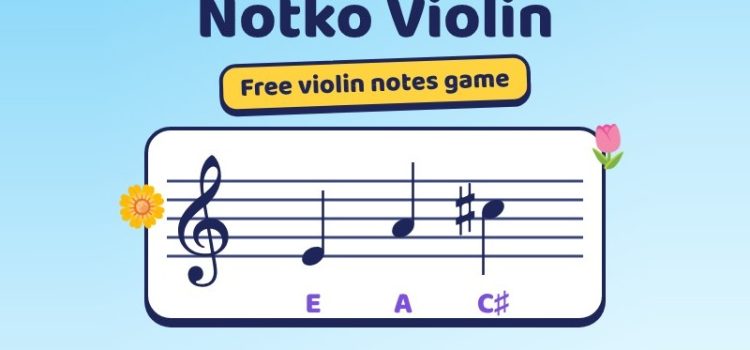
In the first months of lessons, young string players learn to read notes. In the lesson it all makes sense. At home the notes get mixed up: which string is it, which finger, what is the note called? That is why we made Notko, a free note reading game for violin and viola that runs on a phone, tablet or computer.
What children do in the game
Notko takes children through five levels, from open strings to reading first-position notes on their own:
- Open strings: recognise the G, D, A and E string.
- Finger number: link each note to a finger.
- Note name: name the note on the stave.
- Note and finger: choose the right pair.
- On your own: read without help.
Every note can be played back, so the ear practises along with the eye. Each correct answer grows a flower in the child’s garden, and each level ends with a printable certificate. There are no penalties and no timers.
Violin and viola
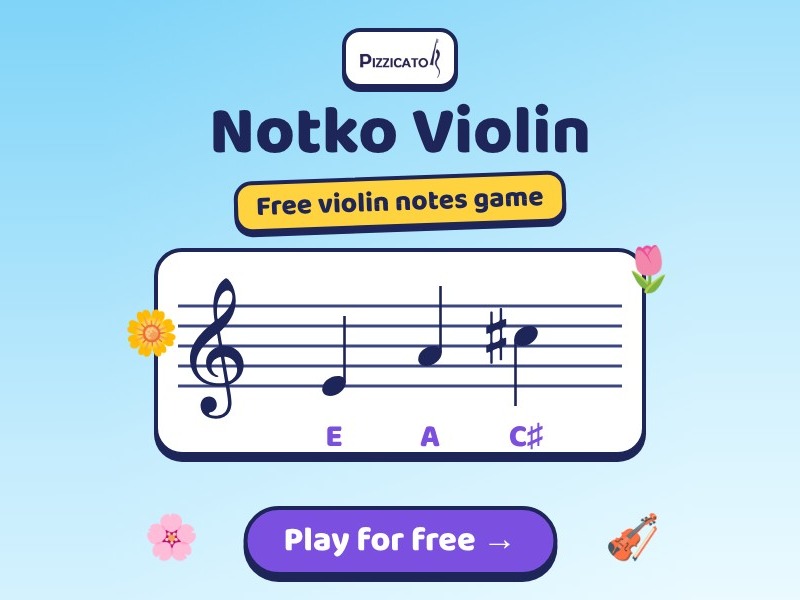
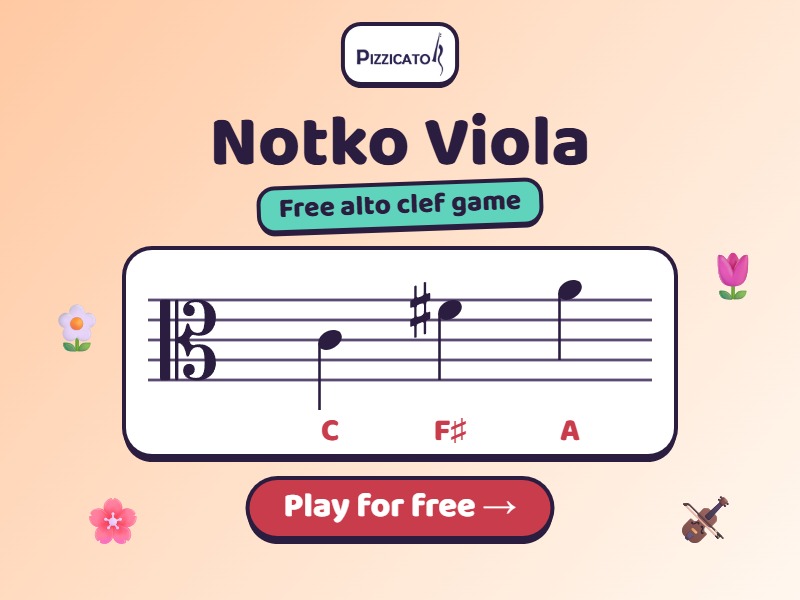
There are two versions. Notko Violin uses the treble clef, and Notko Viola uses the alto clef, which young violists often find the hardest part of reading.
Why a game
Short daily practice works better than a long session once a week. Five minutes of Notko a day is enough to make the notes stick, and children don’t feel it as homework. There is no sign-up and no email, and progress is saved only on your device.
For teachers
Show Notko in the lesson and set it as five-minute homework. Students open it on their phones, so there is nothing to install.
Once first position is secure, the next step is shifting. Ines Ana Tomić’s Exercises and Scales for Violin Positions was called “my new favourite shifting and position-work book” in The Strad.